noun. Someone very famous and admired.
LORE
Recently, a two part question was doing the rounds on BlueSky,
“Do you have a signature deck? How long do you think it’s been that?”
This got me thinking about my oldest existing decks, the games I’ve played with them, and whether I would classify them as my signatures. By the very nature of my Chromatic Project, I only keep one deck for each colour combination at a given time. This leads to many a deck retirement in favour of a new card, idea, or even just once I’ve extracted all the intrigue from the outgoing deck.
This churn has resulted in over 70 individual decks coming and going over the last 5 years, which only makes it all the more impressive when a deck has outlived all of them.
I have three such decks.
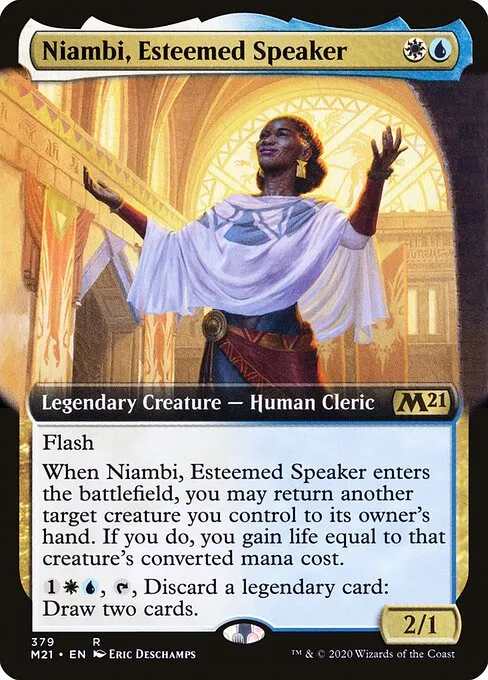
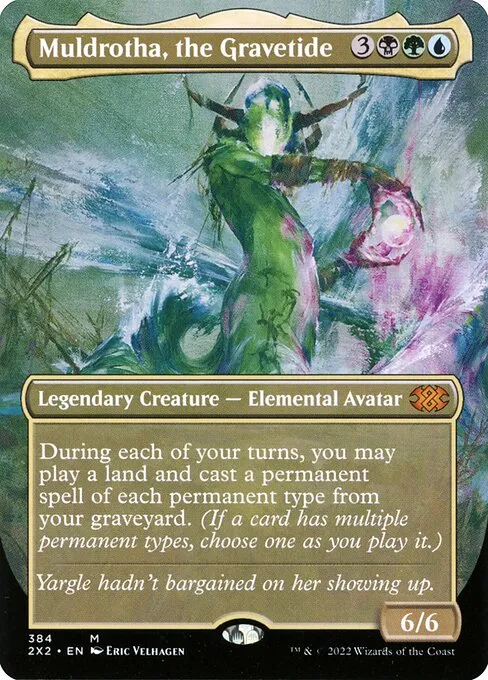
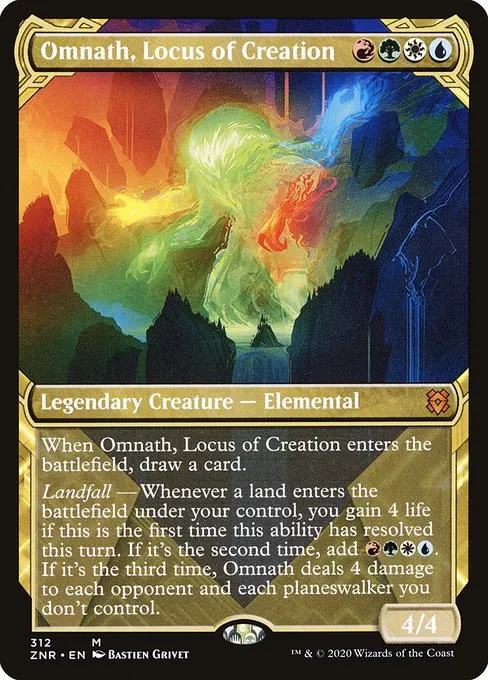
TALE
There are stories to tell for all three of these decks, and we will do so in future posts, but when we’re talking about signature decks, I think it’s hard to envisage the 34th and 73rd most popular commanders of all time as something that defines me.
For something to be my signature deck, I feel it needs to be a snapshot of me, my preferences, my way of thinking, what I enjoy about the game. It needs to be unconventional.
Today, we talk about Niambi.
SAGA
Nowadays, Niambi is a fully fledged ‘Azorius Legendary Reanimator’ deck, and the Legendary part of that descriptor is key; every single nonland permanent is legendary.
But that wasn’t always the case. As one of my first real jumps into regular EDH deck building – I was still focussed on standard up to the start of the pandemic – I just wanted to build an Azorius blink deck without resorting to Brago.
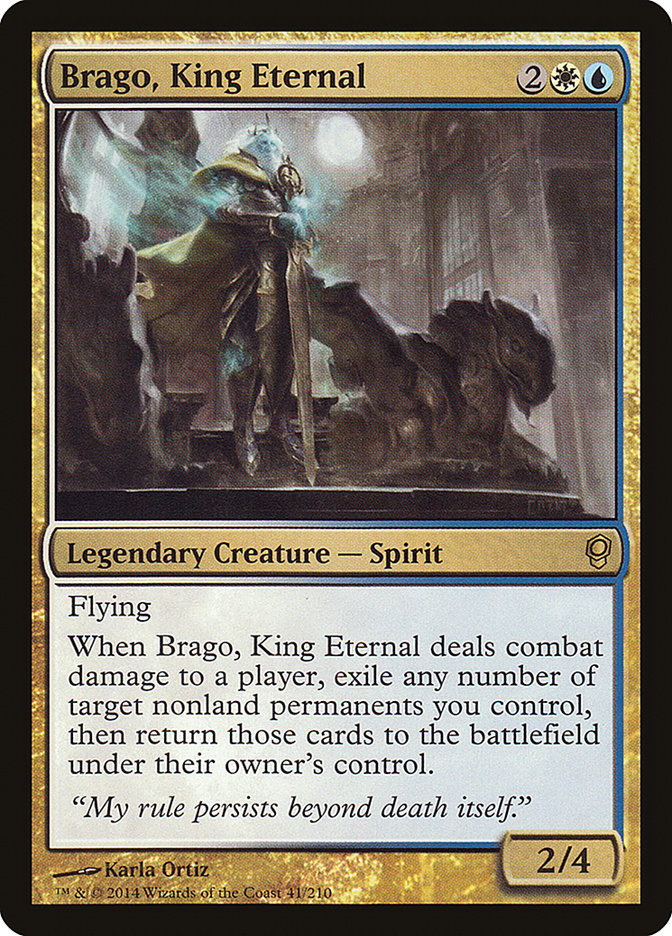
So the deck had some blink, some reanimator effects and put a lot more weight on Niambi’s enters ability than her activated ability. (In many ways, Niambi trod the path my Preston deck eventually ran down.)
The deck was fun – and still included Brago, which it does to this day – but it didn’t really have a unique identity. More just a bad Brago deck.
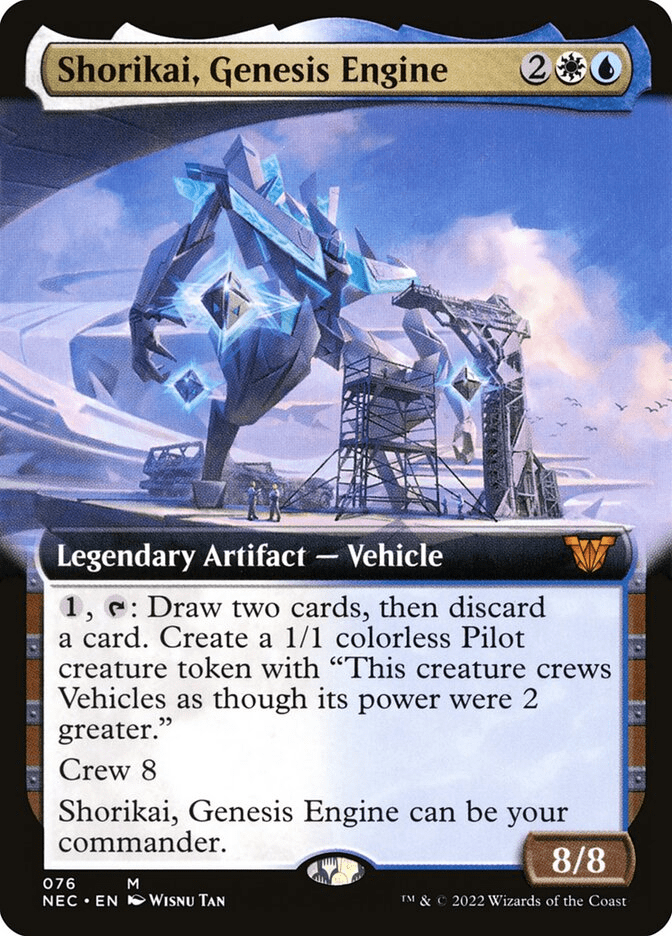
However, since I was still discovering what I truly liked about EDH at this time, I persisted with the original blink/reanimator build with a legendary subtheme. Until Kamigawa: Neon Dynasty, and the release of Shorikai.
Suddenly, Azorius Reanimator got popular. Shorikai is a much better method of filling the graveyard, drawing cards, developing boardstate, and winning the game. It was just everything I wanted the Niambi deck to be, an then somehow even more. It would have been easy to pivot the deck to Shorikai, and just be “another Mech in the wall”.
But… by this point I was committed, not only to Niambi as a card, but at trying to do something different, bring something unique to the table.*
*despite then having Muldrotha, and Omnath decks, I still commit to this way of thinking.
In order to do that though, I needed a conceit. What does Niambi care about that Shorikai doesn’t? Clearly, we could lean into legends.
ICON
Since that decision four years ago, Niambi has become what I would classify as my signature deck (although I am very appreciative of my brother of Niambi, Andy Floury @andyfloury.bsky.social). It is the place that gifts from friends go, the home of my old signed artist proof, and while I don’t use this copy, I have a copy of Niambi signed by Gavin Verhey.
While I don’t play it as often as I used to – it’s just a tad grindy for a lot of people to play against via spelltable – I would consider it a forever deck, something that I will never formally retire
And ultimately, I think that’s the mark of a true signature deck.
Thanks for reading
Dingus Egg
This was a retrospective of what it means to be a legend, and of the deck ‘The Resurrection Legend’, which can be found here.
 the scrambled thoughts of a dingus egg
Leave a comment